Neurotoned · Holding & Letting Go
The person you lost.
The version of yourself who loved them.
The world that doesn't feel okay anymore.
A short message from Jaya.
Your body has been carrying all of it. And that's why talking about it, for years, hasn't been enough.
A somatic grief program created by Jaya Hollohan, MA, Master SEP. Seventeen years of private practice, adapted so you can do it at home, at your own pace, without a waitlist.
You probably came here
for one of these.
Someone died. A partner left. A parent who was never really there, died or disappeared, and left a different kind of hole than people expected. A marriage ended. A friendship faded in a way you still don't understand.
Or the loss is more private than that. The version of you who slept through the night. Who could sit on the floor and get back up. Who had plans for a future that isn't coming. The self you had to leave behind to survive the year you just had.
Or it's the world. The news that won't turn off. The planet that keeps not being okay. The feeling that something is ending that nobody around you seems to be grieving, and you can't tell anymore if it's anxiety or heartbreak, because it's both at once.
Your body doesn't care which one it is. It carries them the same way.
And that's why you're still tired in the mornings. Still bracing when a certain song comes on. Still reaching for a phone to text someone who won't answer. Still waking at 3am because the body you live in hasn't been given a way to set any of it down.
What you've probably already tried
that almost worked.
Every one of these helps someone, somewhere. Most of them helped you a little. None of them moved the thing you came here to move.
The therapist who helped you understand the loss, cleanly and intelligently, and then the weight was still there when you got to your car.
The grief books that were clearly written for other people's grief. Stage 3, Stage 5, as if anyone who has actually grieved would structure it this way.
Friends who meant it when they said "call anytime," and then life, and then a text you didn't want to send because you didn't want to be the sad friend again.
The meditation app that told you to notice your breath while you couldn't breathe.
The wine, the television, the scrolling. Coping that worked until it didn't and then made everything quieter and heavier instead of softer.
The grief group that helped for six months and then ran out of things to say.
The antidepressant, if a doctor offered one. Which helped, or didn't, but wasn't the same as grief moving.
The hard work of "acceptance," which turned out to mean: stop talking about it where other people can hear.
You're not bad at grieving. You haven't been doing it wrong.
Everything you just tried was aimed at your mind. Your understanding. Your story. Grief doesn't live in those places.
Grief lives in the body. That's where this has to be met.
In the way you breathe. The way you brace against mornings. The shoulders that haven't relaxed since the loss. The chest that still reaches for a person who isn't there. The stomach that drops every time you pass the place you used to go together.
That's the layer nothing has touched. That's the layer this program was built for.
The Research Caught Up
What we know about grief
has quietly changed in the last decade.
While most people were still being handed the five stages, neuroscience and somatic therapy were rewriting what grief actually is, where it lives, and how it moves.
Five of the sources that changed the field:
O'Connor's book The Grieving Brain showed something nobody had clearly named before. The brain keeps a living map of the people we love. When they're gone, the brain doesn't believe it. It keeps scanning the world for them. That's why your body reaches for a phone that won't ring. It isn't malfunctioning. It's updating a map that took decades to build.
O'Connor, The Grieving Brain, HarperOne 2022
The Body Keeps the Score, now translated into more than 40 languages, pulled decades of clinical evidence together into one idea. Grief and trauma are not mind problems. They're stored in the body's tissues and nervous system. They release through the body, not through another layer of understanding.
van der Kolk, The Body Keeps the Score, Penguin 2014
Weller expanded what grief even includes. His five gates framework names the forms of grief most people carry without recognising them: the love you never received, the life you expected, the parts of yourself you had to leave behind, the weight of the world's suffering, and the grief your ancestors never processed. Naming it is often the first thing that finally allows it to move.
Weller, The Wild Edge of Sorrow, North Atlantic 2015
Levine's body of work, now the foundation of modern somatic therapy, showed that grief has a physiological arc. The nervous system can release it in tolerable amounts, titrated over time, without being flooded. Ninety-five percent of what nobody told you about grief: you don't have to feel it all at once for it to move.
Somatic Experiencing International · 17,000+ certified practitioners
Porges reframed the numbness, collapse, and "I can't feel anything" state so common in grief as a specific nervous system response called dorsal vagal shutdown. Not a personality trait. Not a failure. A protection mechanism. And, crucially, one that responds to specific body-level practices, not more talking.
Widely adopted across clinical trauma therapy
Five different disciplines. Decades of work. One quiet consensus.
Grief lives in the body. It wants to move. It will, if you give it a way that doesn't ask you to flood yourself in the process.
The problem hasn't been a lack of research. It's been the gap between that research and something you could actually use without a four-month waitlist and $222 a session.
The Partnership
That's why Neurotoned partnered
with Jaya Hollohan.
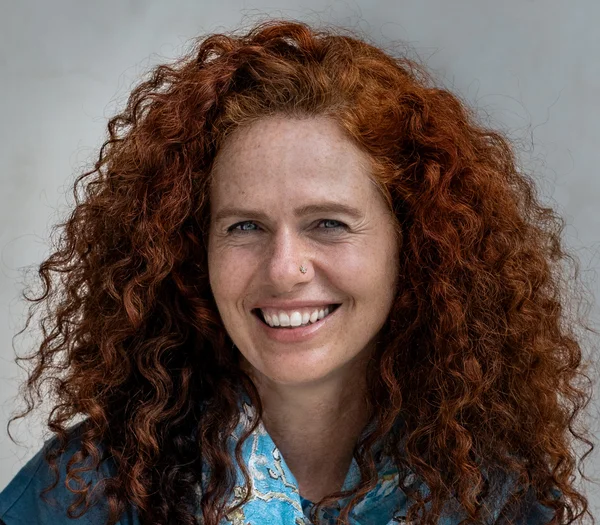
Jaya Hollohan · MA · Master SEP · 17 years · 10,000+ sessions
Jaya has spent seventeen years in private practice sitting with women carrying every kind of loss you can name, and many you can't.
The death of a child. The death of a marriage. The quiet loss of a childhood nobody witnessed. The parent who was technically still alive but had never really been there. The career that ended. The self that got left behind somewhere around year three of holding everything up. The grief nobody acknowledged because it didn't come with a funeral.
Ten thousand sessions in, she learned something most grief frameworks still don't tell you. You don't have to feel all of it at once for it to move. In fact, most people can't. What the body actually needs is five percent of it, a few minutes at a time, with a practitioner who knows when to stop.
Neurotoned asked her to adapt it. Keep the titration. Keep the pacing. Keep the deep trust that grief moves when it's ready, not when a five-step framework says it should. Put it through an app so the women who most need this work can reach it without a waitlist, without insurance approval, without paying the $222 per session her private practice still charges.
The result is the only somatic grief program of its kind. Practitioner-designed. Body-based. Trauma-informed. Built for the grief that never got a name, a ceremony, or a way to move.
Inside the program
Holding & Letting Go.
Integrating Grief, Loss & Life Transitions Through the Body.
Four weeks. Four gentle sessions, each one short enough to do on a day when your capacity is almost nothing. The kind of pace grief actually responds to.
A quick look inside the member area.
If You Feel Too Raw to Start
A gentle on-ramp for the version of you who wants to do this work but can barely press play on a video. Jaya's first instruction is always the same: you don't need to be ready. You just need to be willing to try five percent.
The Weight Your Body Is Carrying
Jaya starts where the grief actually lives. In your breath. Your posture. The tension in your jaw that's been there since the loss. The first week introduces practices that begin softening that holding, five percent at a time. Many women report this as the first real shift they've felt in months. Some have been waiting years.
The Five Forms of Grief
This is the week something breaks open for most people. Jaya names the five kinds of grief we carry without recognising them as grief at all: the love you never received, the life you expected, the self you had to leave behind, the weight of the world's suffering, and the grief your ancestors never processed and quietly handed you. For many women, simply hearing these named is the first real relief they've felt in years.
Feeling It Without Drowning In It
The fear that stops most grief work is the same fear: if I open this, I won't be able to come back. Week 3 is built around that fear. Jaya teaches you to approach the weight in small amounts, feel it, and come back to the room. Feet on the floor. You're still here. Again, a little further, and back out. Over and over, gently, until your body learns something it may have never known: you can feel this and survive it.
The Grief Inside Every Ending (Even the Ones You Chose)
The divorce you chose. The career you left. The children who grew up and left the house you shaped your whole life around. Even wanted change carries grief. Week 4 names the irritability, restlessness, and emotional intensity that come with transition and tells you what they actually are: not a setback. Integration trying to happen. The week closes with a water ritual. For many women, the first moment something they had been bracing against for years finally softens.
The Full Holding & Letting Go Workbook
A printable companion Jaya designed to sit beside you as you move through the weeks. Not homework. No one is grading. Just space to write what you don't have anyone to say out loud to, and to notice what's shifting.
One payment. Lifetime access. 30-day guarantee.
What usually shifts
From this
to this.
Shifts people tend to report, in roughly the order they tend to show up. Not a timeline. Not a promise. Just what usually starts moving when the body finally gets worked with.
Grief doesn't arrive anywhere. It softens in layers. This is what softening looks like.
The Program
Holding & Letting Go.
Yours for $16.99.
In Jaya's private practice this work costs $222 per session. Four sessions is $888. The full program, adapted for home use, is less than a single session.
Program only
The full four-week program.
Yours for life.
Regular price $70
$16.99One payment. Lifetime access. 30-day guarantee.
If you want to go deeper
Grief doesn't finish
on a four-week timeline.
It softens in layers. Some of those layers come up a month in. Some come up in year three. That's the honest shape of it.
For the women who know, early on, that they want support for longer than four weeks, there's a second option. Most people choose it, and here's why.
What the annual unlocks
Twice-monthly live sessions with Neurotoned specialists.
Every other program on the platform.
This is where the deeper work happens. Different expert practitioners each time, each bringing their own modality: somatic, polyvagal, EMDR-informed, acupressure, nutrition, parts work. No one rushing anyone. No one asking you to be further along than you are. Just a steady, witnessed room for women who are still in the middle of it.
Most women who come here for grief discover, somewhere along the way, that their nervous system needs support in other places too. Sleep. Anxiety. The tension in the body that predates the loss by decades. The annual membership gives you everything Neurotoned has ever built, for as long as you stay.
A smaller, quieter space than social media has become. Women who understand. No advice offered unless asked for. No performance.
It runs for a year and then renews. We email you before that happens, so the charge is never a surprise, and you can turn off the renewal from your account at any point in between.
A year on the annual tends to unfold like this.
Month one, you're in Holding & Letting Go. Something begins to soften. Week three, you feel the climate grief for the first time as grief instead of dread, and it lets up a little.
Week six, you drop in on your first live session and realise the relief of being in a room with women who don't ask you to be okay. That call might be with a somatic practitioner. The next one with an acupressure specialist. The one after that with a parts-work clinician. Each a different lens on what your body needs.
Month three, you open one of the other programs because your sleep is coming back online and you realise there's more nervous system work to do.
Month six, you're still practising. Month nine, you forget it was ever an effort.
That's what the annual was designed for.
It's also why most people who hesitate between the two end up choosing this one.
Neurotoned · Annual
Everything above. Plus the live room.
Plus everything else we've built.
Regular price $149
Works out to $5.22 a month. Less than one private session in a year.
Cancel any time. 30-day guarantee.
Side by side.
Program only
Holding & Letting Go
- Four-week somatic grief program
- Printable workbook
- Lifetime access
- 30-day guarantee
- Live specialist sessions 2x / month
- Other Neurotoned programs
- Private community
Neurotoned Annual
Holding & Letting Go + Everything
- Four-week somatic grief program
- Printable workbook
- Access to H&LG for as long as you stay
- 30-day guarantee
- Live specialist sessions · 2x / month
- Every other Neurotoned program
- Private community
- A reminder email before it renews
What the other side
of this sounds like.
“The second week of this program, when Jaya named the five gates, I sobbed for the first time in years. Not flooded. Just released. A small amount. And I came back out of it. That was the first time I had ever done that. Felt it, and came back.”
“My mother died two years ago and I'd been doing all the right things. Therapy. Books. A grief group that was lovely. Nothing had changed what I felt in my body when I woke up in the morning. Three weeks into this program that changed. I can't fully explain why. My body learned something.”
“I came for the divorce and ended up doing the water ritual for the version of me who was trying to save the marriage for the last four years. I didn't know I needed to grieve her too. Nobody had ever named that for me.”
“I've been carrying climate grief so quietly I didn't even have a name for it. Week 2, when Jaya named the grief for the world as one of the five gates, I cried for an hour. Not spiralling. Just finally allowed to grieve something that had been pressing on my chest for years.”
“I did the program first, then went annual because the live specialist sessions are unlike anything I've been in. A different practitioner every couple of weeks, each bringing their own lens. No performing. No advice. Just being in a room with women who don't need you to be further along than you are.”
The guarantee is simple, and fair.
Try the program for 30 days. No homework. No quiz. Just watch a session or two and sit with one of the practices.
If it's genuinely not for you, email us any time in the first 30 days and we refund every penny. No conditions. No forms. No retention specialist. No long phone call you have to brace yourself for.
We ask for that small bit of participation because grief work takes a minute to begin moving, and we want you to actually give it that minute before you decide.
Questions you're
probably sitting with.
I'm in the thick of it. Is this going to overwhelm me?
The whole program is built around the opposite of overwhelm. Jaya works with 5% at a time. You touch the edge of what's there, and then you come back. The room is still the room. Your feet are still on the floor. Over time, your body learns it can feel this and survive it. That learning is the work.
I'm not sure what I'm grieving, but something feels heavy.
That's exactly who Week 2 was designed for. Many women discover, when Jaya names the five forms of grief, that what they've been carrying finally has a shape. Lost parent who never really showed up. A version of yourself that got left behind. The weight of the world pressing on your chest. It all counts. It all deserves to move.
Can I do this while I'm also in therapy?
Yes. Many women do. The program works alongside talk therapy, often making it more effective because it moves the body-level material that talk therapy tends to leave behind. Bring it up with your therapist if it feels right.
What's the difference between the program and the annual?
The program is the four-week course you keep for life, for a single payment of $16.99. The annual adds the things that help grief continue softening after week four: twice-monthly live sessions with a rotating roster of Neurotoned specialists (somatic, polyvagal, acupressure, parts work, and more), every other Neurotoned program, and a private community. If you know up front you want ongoing support, the annual pays for itself almost immediately.
Is the annual a subscription I'll forget to cancel?
It's a membership at $62.58 for the year, and it renews at the end of it. It won't bill you silently: we email annual members before the renewal charge, and you can switch the renewal off from your account at any point before then.
I'm grieving the world, the news, climate. Does this help with that?
Yes, and specifically. Francis Weller, whose framework Jaya teaches, names "the grief for the world" as one of the five gates. The program gives it a shape and a way to move instead of just a knot in your chest that keeps getting tighter.
What if I'm not ready?
Then buy the program, let it sit, and come back when you are. Lifetime access means there's no timer. Some women watch the intro a month in. Some six months in. Some a year. All of it is fine. Jaya designed the first module specifically for the version of you who isn't ready yet.
What's the refund policy again?
30 days, with no conditions attached. If it's genuinely not for you, email us at support@neurotoned.com and we refund every penny. You don't have to have watched anything or explain yourself.
One payment. Lifetime access. 30-day guarantee.
P.S. If you scrolled to the bottom, here's the short version. Your grief lives in your body. Everything that was aimed at your mind was aimed at the wrong place. Holding & Letting Go is the only somatic grief program of its kind, designed by a 17-year practitioner, adapted so you can do it from home. $16.99 for the program. $62.58 a year for the program, every other Neurotoned program, and twice-monthly live sessions with rotating specialists. 30-day guarantee.
P.P.S. If you've been carrying this a long time, you already know the fear. That if you start to let it out, it will drown you. Jaya's entire approach is built around that fear. Nothing about this work asks you to flood yourself. Five percent at a time, over and over, until your body learns the weight is allowed to move.
P.P.P.S. If you have a question this page didn't answer, email support@neurotoned.com. A real person will reply. Slowly, because grief work is slow work, and we honour the same pace we're asking you to trust.